

Logo Universität Bayreuth
Skip to contentSkip to footer
Logo Universität Bayreuth
Illuminated building GW2 from outside at night

The Faculties

The University of Bayreuth has seven high-achieving faculties. They set disciplinary and interdisciplinary priorities that allow the University to stand out from the crowd, both nationally and internationally. The newly founded Faculty of Life Sciences: Food, Nutrition & Health in Kulmbach spreads our spirit of interdisciplinary research far beyond the borders of Bayreuth

However, it is not only at the Kulmbach location that cross-disciplinary thinking takes place: The University of Bayreuth was among the first to offer Geoecology, Sport, Business & Law, and Philosophy & Economics in degree programmes in their own right, thereby knitting together different subjects in fascinating new combinations. This approach still shapes Bayreuth's teaching and research today. Interdisciplinary research is institutionalised via our Focus Areas, as is the lively exchange between the faculties.

Thus, our faculties are both institutional homes for their subject groups, and shaped by the highly individual spirit of their respective departments. And at the same time, they are ever-changing sites of exchange and networking with other disciplines. 

Our Faculties in detail

Man writes formulas on a blackboard
Faculty I

Faculty of Mathematics, Physics & Computer Science

Mathematics, physics and computer science are core disciplines in modern science. They play a fundamental role in our daily lives, and are an essential part of a number of neighbouring disciplines. Our world today would be inconceivable without the knowledge arising from these subjects.
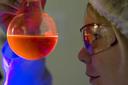
Woman with goggles holds glass flask with orange liquid
Faculty II

Faculty of Biology, Chemistry & Earth Sciences

Can we preserve the environment and natural resources in a sustainable way? How do climate change and microplastics affect the environment? How can energy be converted and used efficiently? These questions are an indication of how important the issues Faculty II deals with are for our future.
Students enter the RW 1 building
Faculty III

Faculty of Law, Business & Economics

A globalized future will see the demand for universal competencies rise even more. Consequently, Faculty III attaches great importance to a general education that deliberately crosses subject boundaries, and involves students in research projects at an early stage.
Man in front of a bookshelf in the library
Faculty IV

Faculty of Languages & Literatures

How will the role of opera and opera productions develop in the 21st century? Why do over 50 million people in West Africa speak Hausa? How can the study of language and literature contribute to a lively dialogue between different cultures?
3 young female students sitting next to each other and laughing into the camera
Faculty V

Faculty of Humanities & Social Sciences

The European Award for Excellence in Teaching in the Social Sciences and Humanities is a unique honour. The Central European University (CEU) awards this prize for outstanding achievements in teaching in the humanities and social sciences. Faculty 5 is proud to already have an EU Award Winner in its ranks.
Spider silk stretches between the fingers of one hand
Faculty VI

 Faculty of Engineering Science

Did you know that spider silk has five times the tensile strength of steel, but is just as elastic as rubber? And that is just one of the many phenomena under investigation at Bayreuth's Faculty of Engineering Science. Specific research fields include materials, process engineering, energy science and technology, mechatronics, and sensor technology.
Various foods are ready for examination in the laboratory
Faculty VII

Faculty of Life Sciences: Food, Nutrition & Health

Nutrition and movement are among the most important factors that influence health in modern societies. However, the causal relationships between nutrition and, for example, the risk of developing type II diabetes or cardiovascular diseases, are not yet fully understood. Finding solutions to these and other interdisciplinary problem areas is the task of the Faculty VII.