Annual Review 2025
Dear Members and Supporters of the University of Bayreuth,
An eventful anniversary year lies behind us: the University of Bayreuth celebrated its 50th anniversary. Numerous events and projects marking this milestone have once again demonstrated how vibrant and forward-looking our university is. At the same time, it was a year of major developments and key decisions that will shape the decades ahead. In this Annual Review, you will find highlights of some of these important events and achievements. It reflects your dedication and commitment—whether in lecture halls, laboratories, offices, workshops, or across the campus.
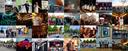
Celebrating a half century of the University of Bayreuth: The University of Bayreuth marked its 50th anniversary with a wide range of events. Once again, it became clear that the university would not be what it is today without the commitment of its researchers, lecturers, and staff. The anniversary year opened with the unveiling of a timeline in the Audimax showcasing milestones in the university’s history. Traditional highlights of the annual event calendar—such as the summer festival Unikat, the German public broadcaster’s “Mouse Open Day,” and the Children’s University—also took place under the banner of the anniversary.
Other memorable moments included the University Stage at the Bayreuth Citizen Festival, the ceremonial anniversary event at the Margravial Opera House, student parties at Fabrik in Bayreuth and Turbine in Kulmbach, the large Uni Quiz, a tree-planting campaign, and the festive jubilee ball that concluded the year in style.
State-of-the-Art Environments that Foster Synergies: With the opening of the Africa Research Centre (FZA) in May, the University has brought together the full breadth of its expertise in African Studies directly on campus. The centre strengthens inter- and transdisciplinary collaboration within Bayreuth’s diverse Africa research landscape. An open day offered all interested visitors the opportunity to explore the new research infrastructure, including the media lab.
Another milestone came in November, when the Bavarian State Parliament’s Budget Committee approved plans for a new innovation hub on campus. The construction of the Institute for Entrepreneurship & Innovation will create an agile space where ideas and projects can grow and where new start-up ventures can take shape.
Successful Research, Excellent Scholarship: The Cluster of Excellence Africa Multiple: Reconfiguring African Studies received an extension and will be funded for another seven years. Funding was also renewed for Collaborative Research Centre TRR225 “Biofab,” through which the University of Bayreuth—together with the Universities of Erlangen-Nuremberg and Würzburg—is continuing to expand cutting-edge research in the field of biofabrication.
A new Emmy Noether Group titled StoreLight will be supported by the German Research Foundation (DFG) with €1.6 million over six years. Four early-career researchers were awarded ERC Starting Grants of €1.5 million each in 2025. In addition, with one of the ERC’s most prestigious awards—the ERC Synergy Grant—Prof. Dr. Stephen Mojzsis will join the University of Bayreuth.
The University of Bayreuth Is Becoming Greener: In October, the university presented its first comprehensive Sustainability Report, highlighting selected measures from recent years—and in particular from 2024. In the area of sustainable mobility, bicycle parking across the campus was renewed and expanded by 80 spaces. E-mobility also advanced: new fast-charging stations have been available on parking lot P2 since September.
Since the same month, the Student Administration Office has been operating entirely paper-free. The shredding of the last physical student record served as a symbolic milestone for efficiency, sustainability, and future readiness enabled by digital transformation.
The University of Bayreuth Is Becoming More International: Despite declining numbers of secondary school graduates in Bavaria, first-semester enrolments at the University of Bayreuth have so far shown no marked decrease. This may be partly due to the increasing proportion of international students, which rose from 18.2 to 20.6 percent. Two new fully English-taught degree programmes also launched in 2025: the master’s programme Digitalization & Sustainability in Materials Science & Engineering in the summer semester, and the bachelor’s programme Data, Science and AI in the winter semester 2025/26.
We were also honoured to host this year’s Alexander von Humboldt Network Meeting and to welcome 220 researchers from 49 countries to Bayreuth.
None of these developments and successes would have been possible without your dedication. We extend our heartfelt thanks for your contributions, creativity, and passion—qualities that shape our university. With this strength, we can look to the challenges ahead with confidence.
Now it is time for a short winter break. We hope you enjoy the Christmas season and the holidays with friends and family. We wish you all a restful break and look forward to working with you again in 2026.
Prof. Dr. Dr. h.c. Stefan Leible, President
Dr. Nicole Kaiser, Provost